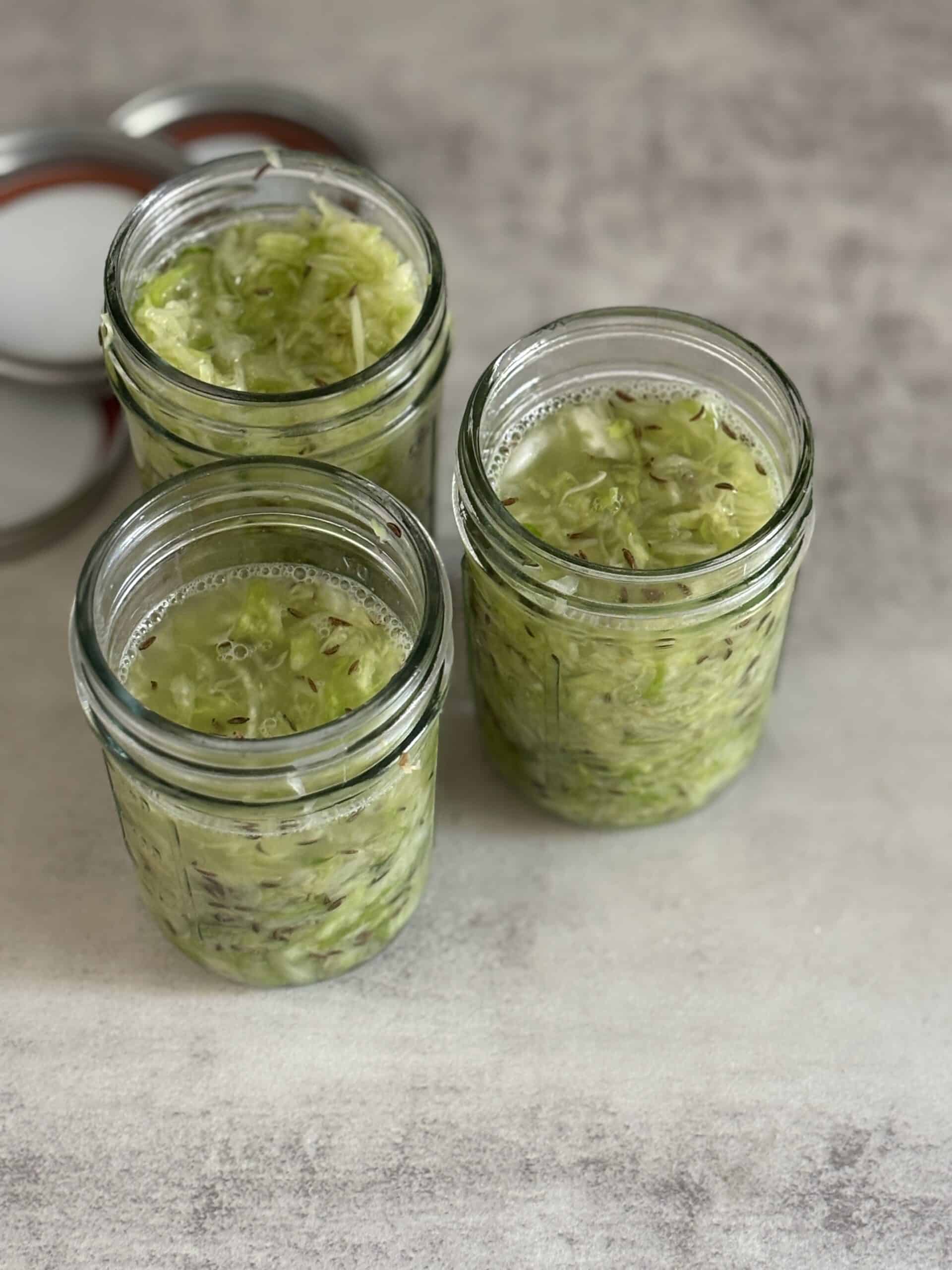
This homemade sauerkraut is one of the simplest and most rewarding things you can make in your kitchen. With just cabbage, salt, and a few spices, you’ll create a tangy, probiotic-rich side dish that’s perfect with sausages, on sandwiches, or straight from the jar.
Remove any tough outer leaves from the cabbage, then slice it thinly.
Place the cabbage in a large mixing bowl. Sprinkle with the salt and knead with your hands for 5–10 minutes, until the cabbage softens and releases its juices.
Mix in the caraway seeds (and bay leaf if using).
Pack the cabbage tightly into a clean glass jar, pressing it down firmly so the brine rises above the cabbage.
Cover the jar with a clean cloth or plastic wrap and secure it with a rubber band (or use a fermentation lid with an airlock instead).Store in a cool, dark place (like a basement or pantry, not the refrigerator).
For the first 3 days, open the jar once a day to press the cabbage back down under the brine. Keep an eye on it throughout fermentation to make sure the liquid continues to cover the cabbage. (See notes above on how to prevent your sauerkraut from turning brown.)
I like to start eating mine after day 3, when it’s lightly tangy and still crunchy. But it's recommended to let it ferment longer (5–10 days or more) for a stronger, more traditional flavor.
Once it reaches your preferred taste, transfer the jar to the refrigerator to slow down fermentation.
Why non-iodized salt? Always use sea salt, pickling salt, or kosher salt. Regular table salt has iodine and anti-caking agents, which can interfere with fermentation.
Add-ins for extra flavor: My favorites are caraway seeds (they give sauerkraut its authentic German taste) and a bay leaf. You can also try juniper berries, garlic, chili flakes, or even a little smoked speck for a heartier version.
When to eat it: I personally love tasting my sauerkraut after just 3 days — it’s crunchy, fresh, and lightly tangy. But if you want a deeper flavor, let it go 7–10 days or even longer.
Serving ideas: Sauerkraut is delicious warm or cold. I’ll always choose warm red cabbage as a side with a roast, but for sausage, sauerkraut is a must. My favorite way to enjoy it? On a homemade spelt roll with a Schaller & Weber sausage and a good mustard.
Storage: Once it’s fermented to your liking, move the jar to the fridge. Sauerkraut keeps for several months if stored properly and always kept submerged in its brine.