
If you ask most people to name a German food, sauerkraut is usually one of the first that comes to mind. As a German, I'm excited to show you just how simple it is to make your own authentic German Sauerkraut Recipe with only four ingredients. For me, it's more than just a side dish-it's a little taste of home and tradition in every bite.

Jump to:
- Get my FREE Pretzel Ebook!
- Where did Sauerkraut Come from?
- Best Salt to Use for Sauerkraut
- How to Prevent Sauerkraut from Turning Brown
- Fermentation Times and Salt Ratios: How Temperature Affects Your Ferment
- Flavor Add-Ins
- Sauerkraut benefits
- Can You Eat Sauerkraut Raw?
- My Favorite Way to Eat Sauerkraut
- More German Dishes you Will LOVE
- Homemade Sauerkraut

Get my FREE Pretzel Ebook!
Where did Sauerkraut Come from?
The idea of fermenting cabbage goes back more than 2,000 years, with roots in ancient China. Over time, the tradition spread through Europe and eventually became a staple in German kitchens, especially during the long winters when fresh produce wasn't available. Every region - and honestly every family - added their own twist. Some keep it plain, others add bay leaves or smoked meats. That's part of what makes sauerkraut so special: it's simple, but also personal.
Best Salt to Use for Sauerkraut
At its heart, sauerkraut is just cabbage and salt. But the salt you use really matters:
- Non-iodized salt (like sea salt, pickling salt, or kosher) is best - iodine can interfere with fermentation.
- Fine salt draws out the juices faster. Coarse salt takes a bit longer, but works just as well.
It's such a simple process, but the details - like choosing your salt - make a big difference.
How to Prevent Sauerkraut from Turning Brown
If you've ever noticed your sauerkraut turning a little brown, don't worry - it happens! Browning usually comes from exposure to oxygen, and there are a few easy ways to help keep your kraut that nice pale color and tasting fresh:
- Keep it fully submerged: This is the most important part! Always make sure your cabbage stays completely under the brine throughout fermentation. You can use fermentation weights or even a clean outer cabbage leaf to help keep it pressed down.
- Use an airtight seal: Try using a jar with an airtight lid or an airlock system. This keeps oxygen out while still allowing gases to escape as your sauerkraut ferments.
- Store it in a cool, dark place: Sauerkraut likes to ferment slowly. Keep it somewhere cool (around 65-72°F / 18-22°C) and out of direct sunlight. Warmer spots can speed things up too much and cause discoloration.
And if I'm being honest - our sauerkraut sometimes turns brown too! We usually can't wait and end up digging in before it's fully fermented. As long as it smells fine and doesn't have any off or funky taste, it's still perfectly good to eat.
Fermentation Times and Salt Ratios: How Temperature Affects Your Ferment
The warmer your kitchen, the faster your sauerkraut will ferment - and the more salt you'll need to keep it balanced. I found this helpful guide on Ela Vegan and am sharing it here for reference. All values below come directly from their guide:
- 15-18 °C (59-64 °F): Use 1.5% salt (15 g per 1 kg cabbage) - takes about 3-5 weeks
- 18-22 °C (64-72 °F): Use 1.8-2.0% salt (18-20 g) - takes about 2-3 weeks
- 22-25 °C (72-77 °F): Use 2.0% salt (20 g) - takes about 7-10 days
- 25-28 °C (77-82 °F): Use 2.2-2.5% salt (22-25 g) - takes about 3-6 days
- Above 28 °C (82 °F and up): Use 2.5% salt (25 g) - takes about 2-4 days
Note: These recommendations are taken directly from Ela Vegan.
Flavor Add-Ins
In my kitchen, I usually keep it classic, but sometimes I like switch it up.
- Caraway seeds - my go-to for that unmistakable German flavor.
- Bay leaf - adds a gentle depth.
- Speck (smoked pork belly) - Gives a beautiful smoky note.
- Or, you can get creative: garlic, juniper berries, or even a touch of chili.
Sauerkraut benefits
Besides being delicious, sauerkraut is packed with goodness:
- Gut health - raw sauerkraut is full of probiotics that help digestion.
- Nutrient-rich - vitamin C, vitamin K, fiber, iron… it's a powerhouse in a simple jar.
- Immune support - those good bacteria can help strengthen your body's natural defenses.
Can You Eat Sauerkraut Raw?
Yes! And actually, that's the best way to enjoy it if you're after the probiotics. Cooking it can lessen the live cultures, so I like to eat mine raw most of the time - tucked into a roll with sausage and mustard, or just as a crunchy side on the table.
My Favorite Way to Eat Sauerkraut
I love it as a side dish, warm or cold, but honestly, my favorite way is rustic and hearty: piling sauerkraut on one of my homemade spelt flour rolls, adding a grilled Schaller & Weber sausage, and finishing it with a good German mustard. It's the kind of meal that makes me feel like I'm right back in Germany.
If you're planning a get-together, sauerkraut is also the perfect dish to bring along. I've shared more ideas in my guide on what to bring to a German Oktoberfest potluck.
More German Dishes you Will LOVE
-
Onion Tart (Zwiebelkuchen Recipe)
-
Red Cabbage with Apples (Traditional German Rotkohl)
-
Easy Zucchini Tart - The Answer to Too Many Zucchinis
- German Coleslaw Recipe


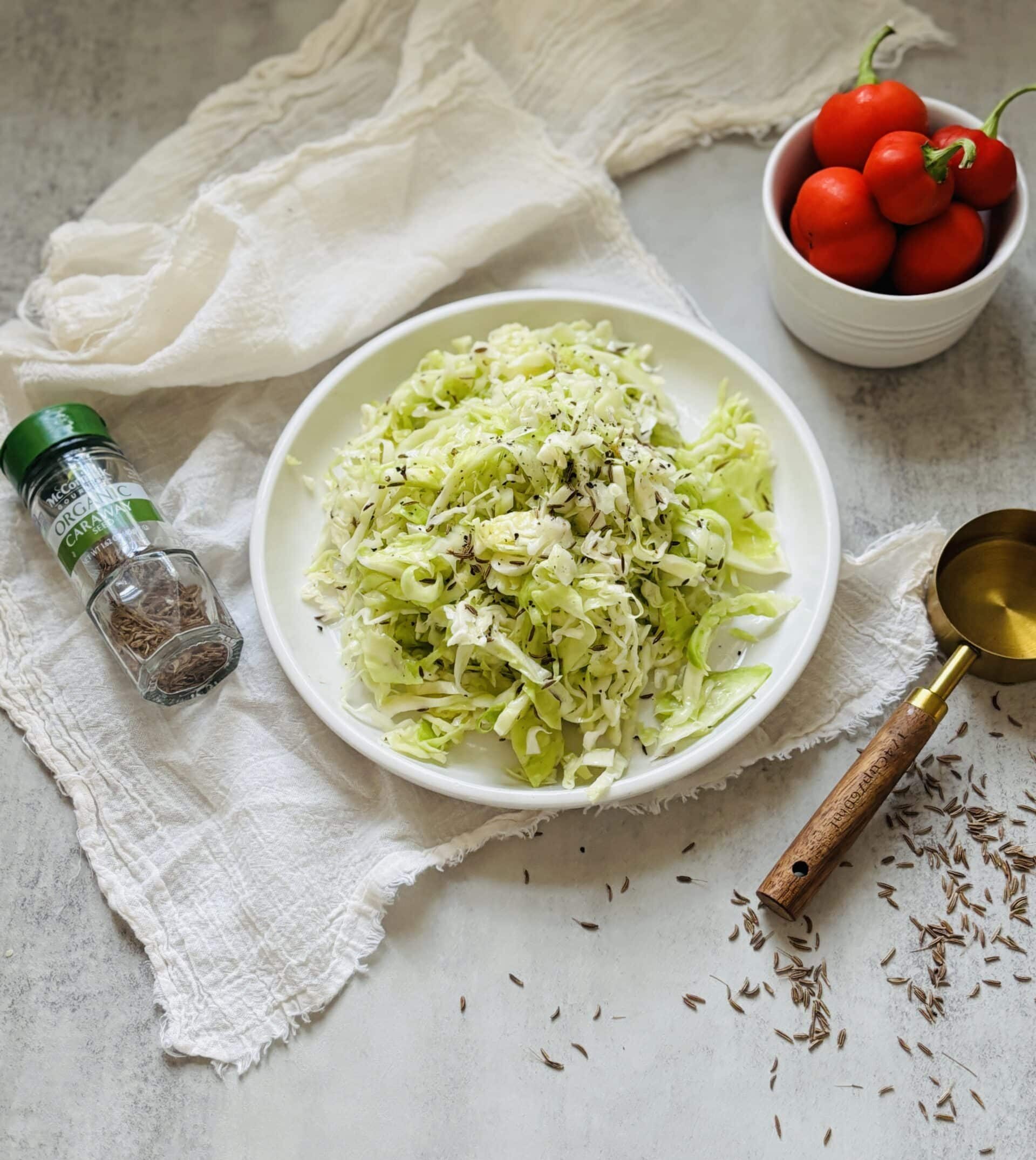
Homemade Sauerkraut
Ingredients
Equipment
Method
- Remove any tough outer leaves from the cabbage, then slice it thinly.
- Place the cabbage in a large mixing bowl. Sprinkle with the salt and knead with your hands for 5-10 minutes, until the cabbage softens and releases its juices.
- Mix in the caraway seeds (and bay leaf if using).
- Pack the cabbage tightly into a clean glass jar, pressing it down firmly so the brine rises above the cabbage.
- Cover the jar with a clean cloth or plastic wrap and secure it with a rubber band (or use a fermentation lid with an airlock instead).Store in a cool, dark place (like a basement or pantry, not the refrigerator).
- For the first 3 days, open the jar once a day to press the cabbage back down under the brine. Keep an eye on it throughout fermentation to make sure the liquid continues to cover the cabbage. (See notes above on how to prevent your sauerkraut from turning brown.)
- I like to start eating mine after day 3, when it's lightly tangy and still crunchy. But it's recommended to let it ferment longer (5-10 days or more) for a stronger, more traditional flavor.
- Once it reaches your preferred taste, transfer the jar to the refrigerator to slow down fermentation.
Nutrition
Notes
- Why non-iodized salt? Always use sea salt, pickling salt, or kosher salt. Regular table salt has iodine and anti-caking agents, which can interfere with fermentation.
- Add-ins for extra flavor: My favorites are caraway seeds (they give sauerkraut its authentic German taste) and a bay leaf. You can also try juniper berries, garlic, chili flakes, or even a little smoked speck for a heartier version.
- When to eat it: I personally love tasting my sauerkraut after just 3 days - it's crunchy, fresh, and lightly tangy. But if you want a deeper flavor, let it go 7-10 days or even longer.
- Serving ideas: Sauerkraut is delicious warm or cold. I'll always choose warm red cabbage as a side with a roast, but for sausage, sauerkraut is a must. My favorite way to enjoy it? On a homemade spelt roll with a Schaller & Weber sausage and a good mustard.
- Storage: Once it's fermented to your liking, move the jar to the fridge. Sauerkraut keeps for several months if stored properly and always kept submerged in its brine.

This Sauerkraut is my to go to recipe every cabbage season. I like to have my girls help make this recipe. It is fun, and much easier vs. what it sounds like. We like to eat it with sausage, or as a side dish.